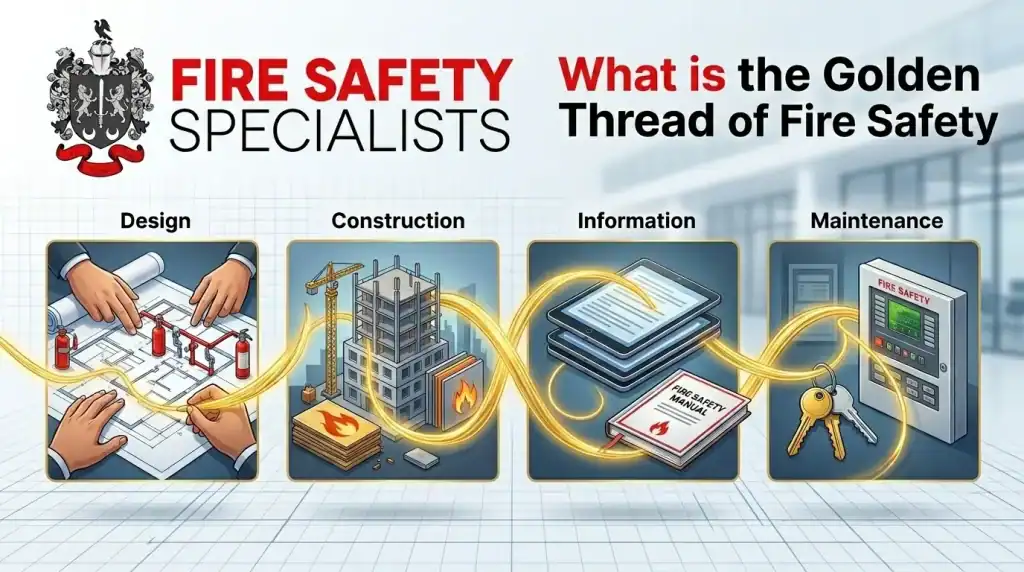
Fire safety in buildings changed forever after the Grenfell Tower fire. That tragedy exposed serious gaps in building information, accountability related to fire safety, and compliance with building regulations. In response, the UK introduced the Building Safety Act 2022. At the center of this reform is the golden thread of information.
The golden thread concept requires accurate, digital, and accessible safety information throughout a building’s lifecycle. It connects design, construction, occupation, and maintenance into one clear record. This guide explains what the golden thread means, why it matters, and how to use it to improve building safety and compliance in real life.
Before we go deeper, here is what you need to know:
In short, the golden thread protects both the building and people inside it.
The golden thread of information is a complete digital record of everything about a building that relates to safety. It includes design decisions, construction details, safety features, and ongoing maintenance. In fire safety, this means keeping clear records of fire doors, fire protection systems, fire safety measures taken, and the building’s fire strategy. The golden thread must be the building’s single source of truth.
The purpose of the golden thread is simple. It ensures the right people have the right safety information at the right time. That includes building owners, accountable persons and building safety managers, contractors, and regulators. Without accurate building information, it becomes hard to manage safety risks or show compliance with applicable building regulations.
Understanding the golden thread also means understanding responsibility. The golden thread in construction begins at the design and construction phase and continues throughout the building. It captures information in your building from start to finish. It documents how the building was designed, built, and maintained. That record helps maintain and manage building safety long after construction ends.
The golden thread is no longer optional guidance. It is a legal duty under building safety and compliance law, designed to protect lives and strengthen fire safety in buildings.
After the Grenfell Tower fire, Dame Judith Hackitt published her report, Building a Safer Future. It called for a major cultural shift in the management of building safety. The review of building regulations revealed that poor documentation and weak accountability related to fire safety increased risk across the sector.
The golden thread principles were introduced to prioritise life safety. The objective of the golden thread is to ensure transparency, traceability, and accountability throughout the lifecycle of the building.
Yes. Under the building safety act 2022, higher-risk residential buildings must maintain a golden thread of information. These buildings are typically at least 18 metres high or have seven storeys with two or more residential units.
The golden thread must be compliant with applicable building regulations. It must clearly demonstrate safety and compliance at each gateway stage of the project.
Responsibility changes during the phase of a building:
Clear responsibility and defined roles are essential to maintain the golden thread and ensure ongoing building safety.
The golden thread must capture detailed and structured building information. The table below explains what is stored in the golden thread and why it matters.
| Phase | Required Information | Why It Matters |
| Design and Construction | Drawings, fire safety strategy, safety systems, change control records | Shows compliance with building regulations and fire safety strategy |
| Completion | Fire and emergency file, certificates, fire door data, FD60 fire door ratings | Confirms safety standards and fire safety measures |
| Occupation | Safety case report, maintenance logs, inspection records | Helps manage building safety risks and fire and structural safety |
In addition to the table above, the golden thread information should include:
All information in the golden thread must be digital, secure, and accessible. It must be clear and written in plain language.
Maintaining the golden thread requires clear systems, defined responsibility, and ongoing attention. Without structure, even strong fire safety plans can fail. Below is a practical action plan to help you maintain the golden thread and protect building safety.
The importance of maintaining the golden thread cannot be overstated. Strong records support strong safety management and help prevent avoidable risks.
A strong golden thread improves building safety. It connects design intent to real-world conditions. It ensures fire safety measures are documented, verified, and reviewed. This includes fire door ratings, fire stopping details, and the full fire safety strategy.
The golden thread also helps mitigate building safety risks. It allows building owners to identify gaps before they become serious problems. By tracking safety systems and inspection data, the building’s golden thread reduces the consequences of fire spread or structural collapse.
Most importantly, the golden thread must be clear. It supports safety and compliance by giving regulators and emergency services accurate information. That transparency builds trusted fire safety practices. When used correctly, the golden thread improves building safety and protects building occupants.
The golden thread only works when it is accurate, updated, and actively managed. Yet in many buildings, small gaps in process turn into serious safety risks. Below are the most common mistakes that weaken the golden thread and put building safety at risk.
Each of these mistakes weakens the golden thread in building management.
To use the golden thread effectively, treat it as a living system. It should reflect everything about a building and its history. It must support fire safety in buildings and overall management of building risk.
The golden thread is more than a policy requirement. It is a structured way to improve building safety and fire safety across the entire lifecycle of a building. Introduced after the Grenfell Tower fire and formalised through the Building Safety Act 2022, it ensures accountability and clarity.
When properly managed, the golden thread supports compliance with building regulations, reduces safety risks, and strengthens fire protection strategies. It protects the building and people inside it. For building owners and those responsible for building safety, the message is clear: the golden thread must be accurate, digital, and actively maintained.
Is the golden thread legally required?
Yes. Under the Building Safety Act 2022, higher-risk residential buildings must maintain a golden thread of information. It is a legal duty designed to improve building safety and ensure compliance with building regulations.
What is the golden thread of safety?
The golden thread is a digital, structured record of safety information throughout a building’s lifecycle. It supports fire and structural safety by keeping accurate, accessible records of design, construction, and maintenance.
When does the golden thread start?
It begins before construction starts and continues through the design and construction phase. It remains active during occupation and ongoing maintenance of the building.
Who is responsible for the golden thread?
During construction, the client, principal designer, and principal contractor manage it. Once the building is occupied, accountable persons and building safety managers take responsibility.
What information is included in the golden thread?
It includes design drawings, fire safety measures, compliance certificates, fire door details, maintenance records, and change control logs. This information helps demonstrate compliance and manage building safety risks.
You may also want to read:
Fire Strategy Document vs Fire Risk Assessment: Do You Need Both?
Do You Really Need Grade LD2 Detection Systems?