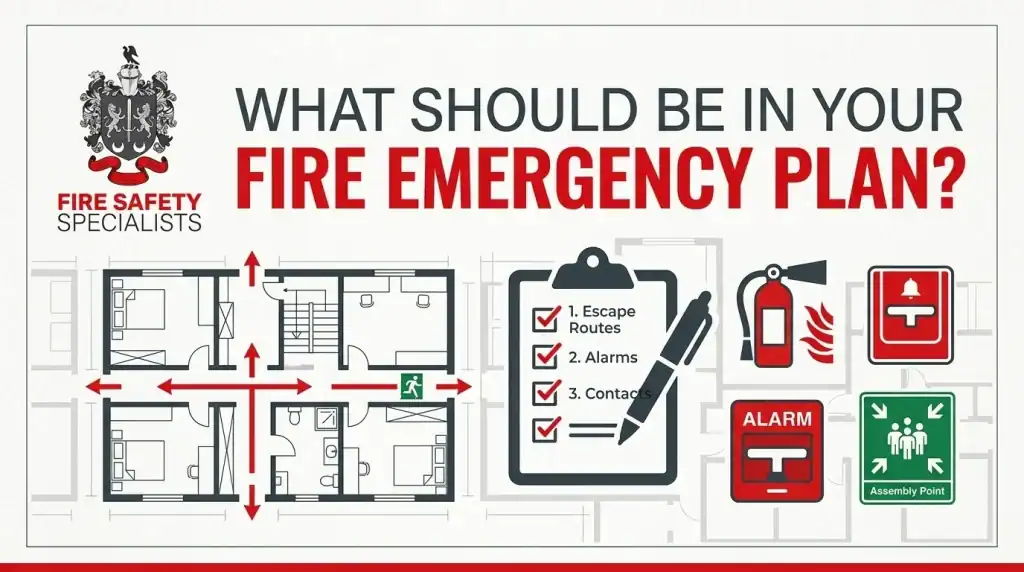
A fire emergency can happen without warning. In the event of a home fire or workplace incident, people often have only minutes to escape safely. That is why a written fire emergency plan is not optional. It is a critical safety document.
Under the Regulatory Reform (Fire Safety) Order 2005, every responsible person must make a plan for emergency evacuation. This emergency plan must protect people within the building and outline clear evacuation procedures. It must also explain how to alert occupants and contact the fire department.
This guide answers a key question: What does an emergency plan under the Fire Safety Order include? You will also learn the difference between evacuation vs emergency plan, whether emergency plans are mandatory for businesses, and how often drills should be run.
A compliant fire emergency plan must be clear, practical, and easy to follow during a real fire. The Fire Safety Order requires structured fire emergency plan contents that cover both prevention and response.
Here are the essential components:
These elements form the backbone of any emergency action plan required by law.
Many people confuse evacuation vs emergency plan. The difference matters for compliance and safety.
An emergency plan covers the full response to a type of emergency, including fire, chemical release, or disaster. It includes prevention, communication, evacuation, and post-incident steps.
An evacuation plan focuses only on leaving the building safely.
| Emergency Plan | Evacuation Plan |
| Covers full fire emergency response | Focuses only on escape |
| Includes roles, alerts, communication | Focuses on routes and exits |
| Includes fire safety measures and follow-up | Ends once people exit |
| Required under the Fire Safety Order | Forms part of the emergency plan |
Both plans work together. The evacuation section is a core part of the broader emergency plan. Without a full action plan, evacuation procedures alone are incomplete.
Yes. Emergency plans are mandatory for businesses under the Regulatory Reform (Fire Safety) Order 2005. The law places responsibility on the “responsible person,” usually the employer, building owner, or managing agent. They must ensure people are prepared and protected.
The emergency plan applies to offices, shops, warehouses, care homes, schools, high-rise buildings, and common areas of flats. Any non-domestic premise must have documented fire safety procedures. This includes emergency evacuation procedures and clear communication systems.
Failure to comply can result in enforcement notices, fines, or prosecution. In serious cases, businesses may be forced to close. More importantly, lives may be placed at risk. A compliant fire emergency plan is both a legal requirement and a duty of care.
A practical fire emergency action plan must be clear, simple, and ready to use during a real fire emergency. It should explain your emergency evacuation procedures, support immediate evacuation, and meet legal duties under the Regulatory Reform Order.
Identify fire hazards such as faulty wiring, heating equipment, storage risks, or hazardous materials. Consider who may be at risk within the premise. This step forms the foundation of your fire emergency plan contents and overall fire safety.
Map all escape routes and exits. Ensure two ways out where possible. Keep corridors, stairwells, windows and doors clear. Confirm safe evacuation routes in case of a home fire or workplace fire.
Define clear roles and responsibilities. Appoint fire wardens and assign someone to assist any person with a disability or limited mobility. Name a backup designee to ensure support at all times.
Install a working fire alarm and smoke alarm, including placement outside each separate sleeping area where required. Test regularly so everyone reacts quickly when the alarm sounds. Early warning matters because every second counts.
Decide who will alert occupants and who will call the fire department. Display emergency numbers clearly. Ensure someone can quickly notify responders during any type of emergency.
Choose an outside meeting place for a headcount and family meeting. If anyone is unaccounted, report it immediately. Do not re-enter the building until cleared by a firefighter.
Write the action plan clearly. Train staff or household members and run drills at least once or twice a year. Regular practice ensures people are prepared for the event of a home fire and can evacuate safely.
This structured approach helps you make a plan that supports safe fire evacuation, clear evacuation procedures, and stronger protection during a real fire emergency.
Drill frequency is essential for preparedness. A written plan is not enough. People must practice.
For most businesses, fire drills should be conducted at least once per year. Higher-risk premises may require more frequent drills. In high-rise or complex buildings, drills may be scheduled twice a year.
During drills:
It is important to determine whether everyone responds quickly when the alarm sounds. After each drill, review gaps and improve the plan. Regular testing ensures emergency evacuation procedures remain effective.
When a fire alarm sounds, immediate evacuation must occur. People should not delay to collect belongings. Everyone must leave the building using the safest evacuation routes.
If there is smoke or fire, occupants should stay low and move toward the nearest exit. Elevators must not be used. In some cases, individuals may become trapped in the building. The plan must explain how to seal doors, signal for help, and contact emergency services.
At the outside meeting place, a headcount must be taken. If anyone is unaccounted for, notify the fire department immediately. Under no circumstances should anyone re-enter the building until firefighters declare it safe. Clear evacuation procedures reduce panic and save lives.
A compliant fire emergency plan must include five core elements:
If any of these elements are missing, the emergency plan is incomplete. A structured approach ensures fire evacuation runs smoothly during a real fire.
A fire emergency plan is more than paperwork. It is a structured system that protects lives and ensures compliance with the Regulatory Reform Order. It must include evacuation procedures, defined responsibilities, working alarms, and regular drills.
Understanding evacuation vs emergency plan differences strengthens your approach. Regular review, training, and updates keep the plan effective. Fire safety depends on preparation. When every second counts, a well-documented and practiced emergency plan makes the difference between order and chaos.
A fire emergency plan includes roles and responsibilities, evacuation procedures, alarm systems, escape routes, assembly points, and contact details for the fire department. It must outline how to respond during a fire emergency and how to protect occupants.
The five components include risk assessment, communication systems, evacuation procedures, assigned responsibilities, and regular drill testing. These ensure the emergency plan works during a real incident.
Most workplaces must run fire drills at least once per year. Higher-risk buildings may require more frequent drills. All drills should be recorded and reviewed.
An emergency plan covers the full response to a type of emergency. An evacuation plan focuses only on leaving the building safely. The evacuation plan forms part of the broader emergency plan.
Yes. Under the Regulatory Reform (Fire Safety) Order 2005, businesses must have a documented fire emergency plan to protect occupants and comply with legal duties.
You may also want to read:
Understanding the Duties of a Fire Marshal